Quadratic Formula Calculator: Solved Step by Step
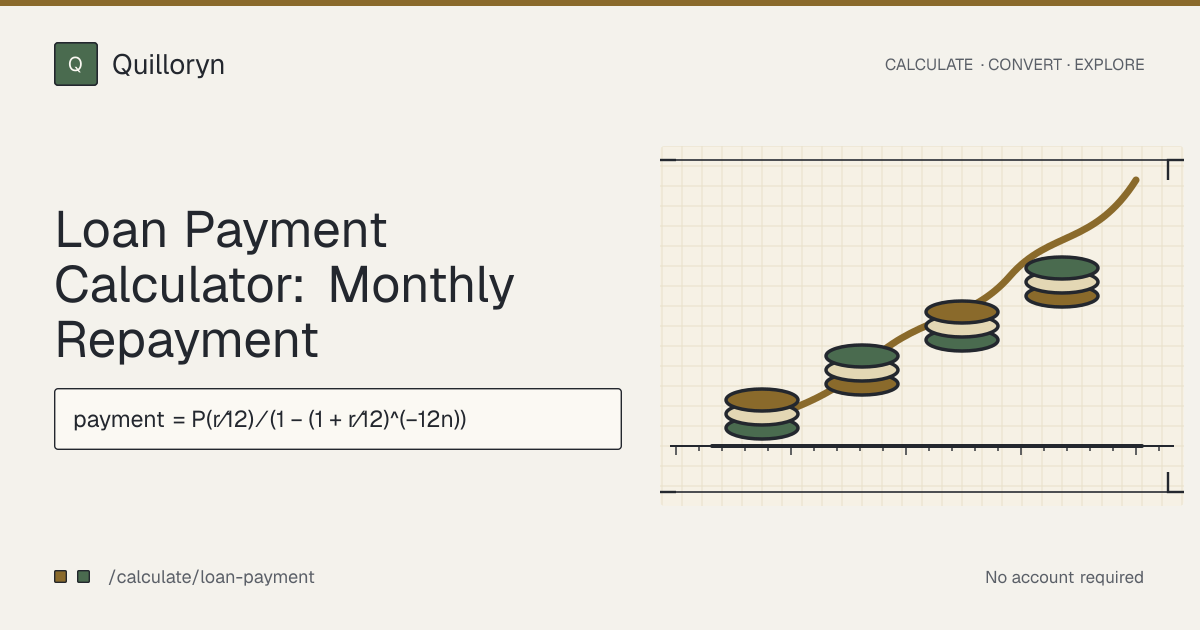
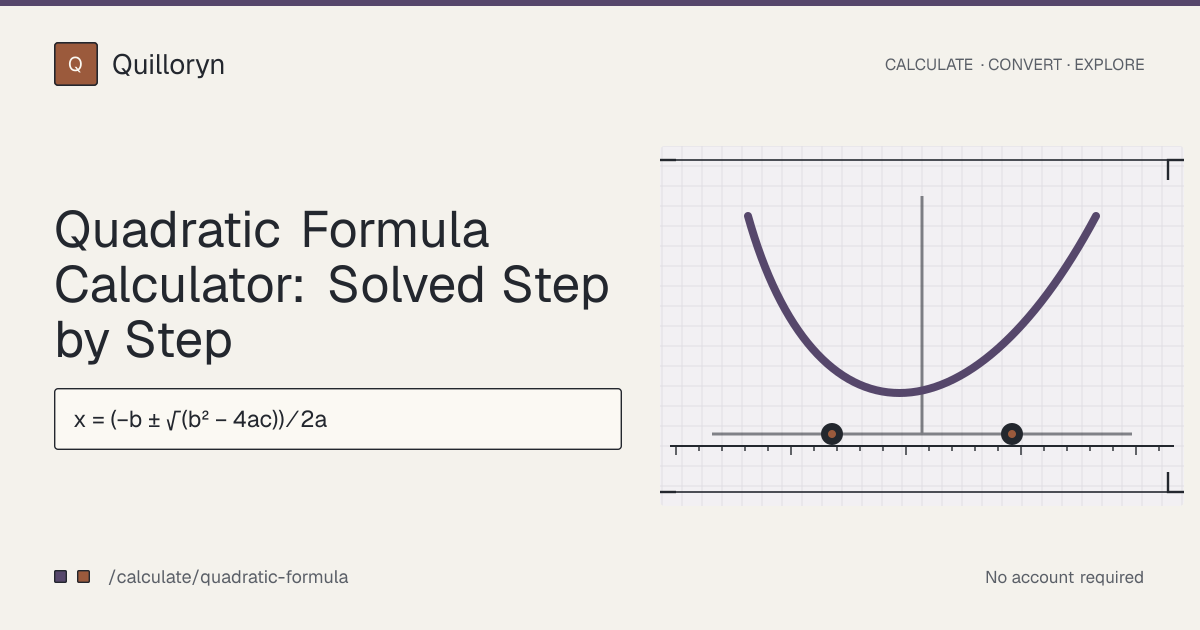
The quadratic formula solves any second-degree equation. The discriminant b² − 4ac tells you in advance whether to expect two real roots, one repeated root, or complex roots.
Want simplification, history or saving? Open it in the formula tool.
How the solution works
The widget evaluates the plus branch for a = 1, b = −5, c = 6, giving x = 3. Change the plus to a minus for the second root, x = 2. Always substitute each root back: 2² − 5(2) + 6 = 0.
Reading the discriminant
Positive means two distinct real roots; zero means one repeated root; negative means complex roots. If a is zero the equation is linear, not quadratic, and this formula does not apply.
Keep in mind
- Coefficients must be numbers; a cannot be zero here.
- Substitution is the check — a plausible-looking decimal is not proof.
More calculators